|
|
|
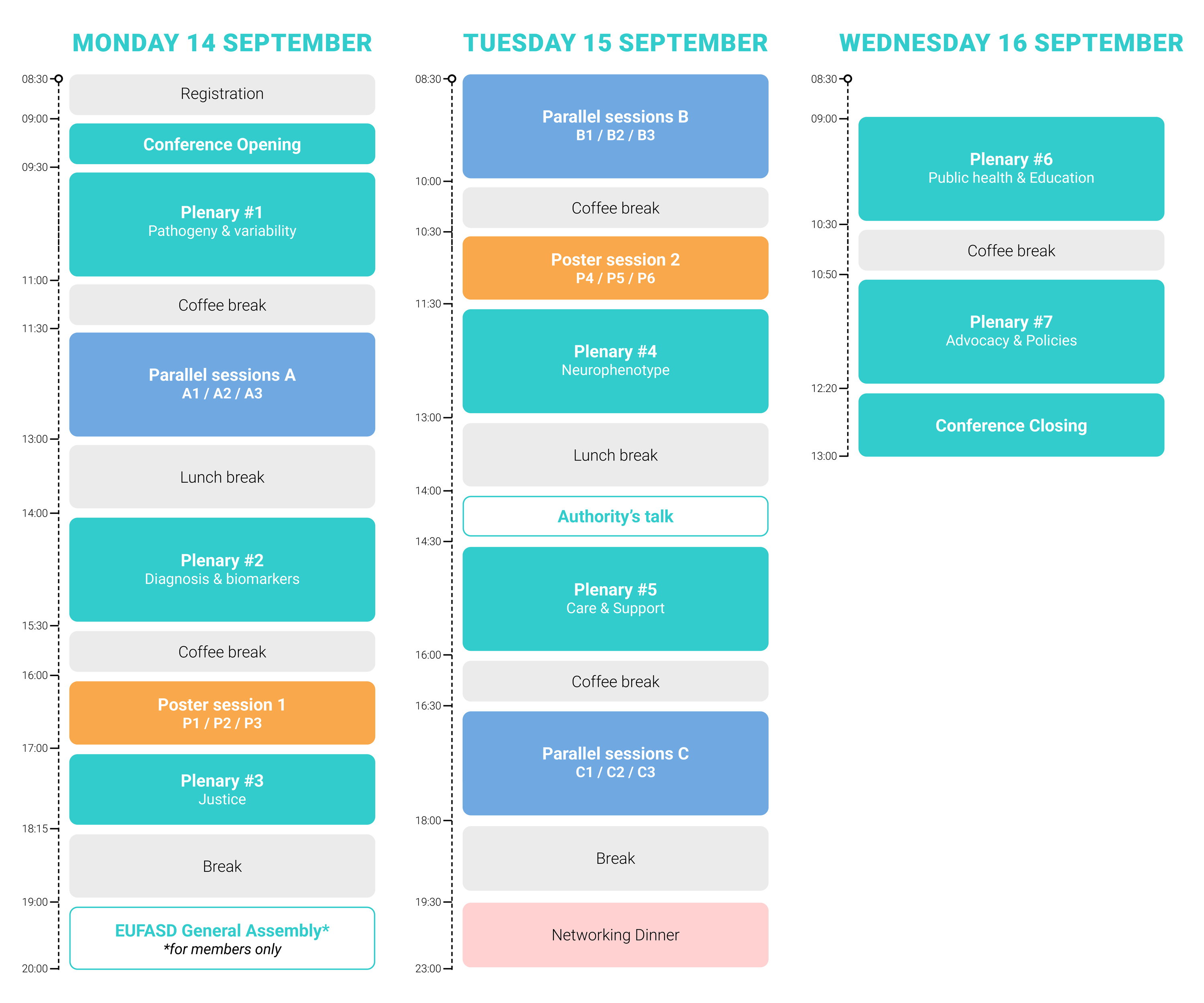
| Programme |
 |
 |
 |
| Sunday, September 13: Family Day (in french) from 9:00 am to 6:30 pm |
 |
Please discover below our guest speakers:
 |
From individual susceptibility
to common mechanisms:
how genetics and epigenetics shed light on our understanding
of FASD |
 |
Challenges and pitfalls of estimating FASD prevalence:
share of fetal alcohol harm
to common but substantial neurodevelopmental hazard |
Dr. Nina Kaminen-Ahola,
University of Helsinki, Finland |
Pr Jürgen Rehm, |
| DE/CA Hamburg, Toronto |
| Dr. Kaminen-Ahola is an Associate Professor in Epigenetics in the Department of Medical and Clinical Genetics, University of Helsinki, Finland. Her lab aims to understand how our phenotypes are formed by our genome, early life environment, and stochastic events. Her focus is on the epigenome and its role as a mediator of environmental influences. By revealing the molecular mechanisms of environmental-induced epigenetic alterations as well as their consequences on gene regulation and embryonic development, she will clarify the etiology of complex phenotypes in health and disorder. |
Pr. Jürgen Rehm is senior scientist in the Institute for Mental Health Policy Research at the Centre for Addiction and Mental Health (CAMH). He is a professor and was the inaugural chair of addiction policy in the Dalla Lana School of Public Health at the University of Toronto. He is a leader in generating and analyzing the scientific data needed to inform clinicians and policymakers on strategies to reduce alcohol-, tobacco-, and other drug-related harms. His recent research has more and more included interactions between socio-economic status, poverty and substance use, including analysis of policies and interventions with respect to reducing or increasing inequalities. |
 |
Whole-person, Whole-Community: Advancing comprehensive care and support for people with FASD |
 |
Multimodal brain phenotype in FASD: what do we learn from longitudinal birth cohorts? |
Natasha Reid,
University of Queensland,
Brisbane, Australia |
Ernesta Meintjes,
Cape Town, South Africa |
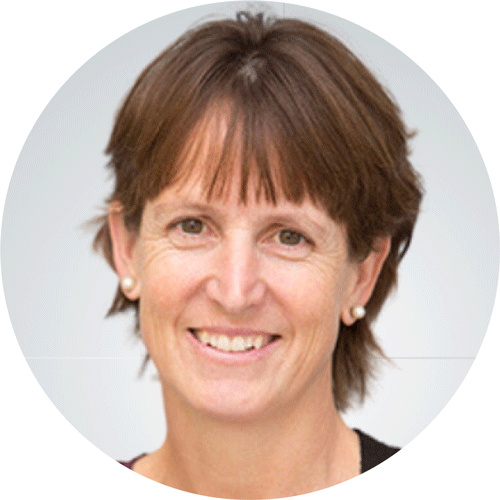
| Dr. Reid is a Clinical Psychologist and Senior Research Fellow at the Child Health Research Centre. She leads the Perinatal and Early Life Exposures Research Group which is dedicated to uncovering the foundational influences on lifelong health and well-being. Her research focuses on the critical impact of environmental, nutritional, substance exposures such as prenatal alcohol exposure, and psychosocial factors during the perinatal and early childhood periods on long-term health outcomes. By advancing our understanding of these early exposures, she aims to inform public health strategies, improve clinical practices, and ultimately enhance the health and well-being of future generations. Her work contributes to reducing the burden of chronic diseases and mental health disorders, promoting healthier developmental outcomes, intergenerational health benefits and fostering resilient communities. Her clinical research interest includes developing and implementing effective preventive interventions for prenatal exposures, improving assessment methods and accessibility to services and early detection for FASD, developing and implementing effective interventions to improve outcomes for children with FASD and their families. |
Ernesta Meintjes is Professor in Biomedical Engineering at the University of Cape Town (UCT). She joined UCT in 1998, initially as a postdoctoral fellow, after completing her PhD in Physics at Oregon State University. Following the commissioning of the first magnetic resonance imaging (MRI) scanner at Groote Schuur Hospital in November 2001, she established a research programme in MRI and in 2004 implemented the first functional MRI studies in South Africa. These studies led to the establishment of the Cape Universities Brain (subsequently Body) Imaging Centre (CUBIC), of which she has been director since 2015. Her research focuses on developing technology to track and correct motion during MRI scanning, and applying these methods to study the effects on brain development of prenatal insults and diseases particularly relevant to South Africa, including HIV infection and exposure, and prenatal alcohol or drug use. In 2024, she and her colleague, Mr Jermy, established the SoLow Consortium to develop a point-of-care very-low-field MRI scanner for Africa. She has authored/co-authored more than 140 peer-reviewed journal papers and more than 250 international conference papers, supervised 26 PhD and 31 MSc students, and mentored 22 postdocs. She is a fellow of UCT and the American Institute for Medical and Biological Engineering.
|
|
|
|
|